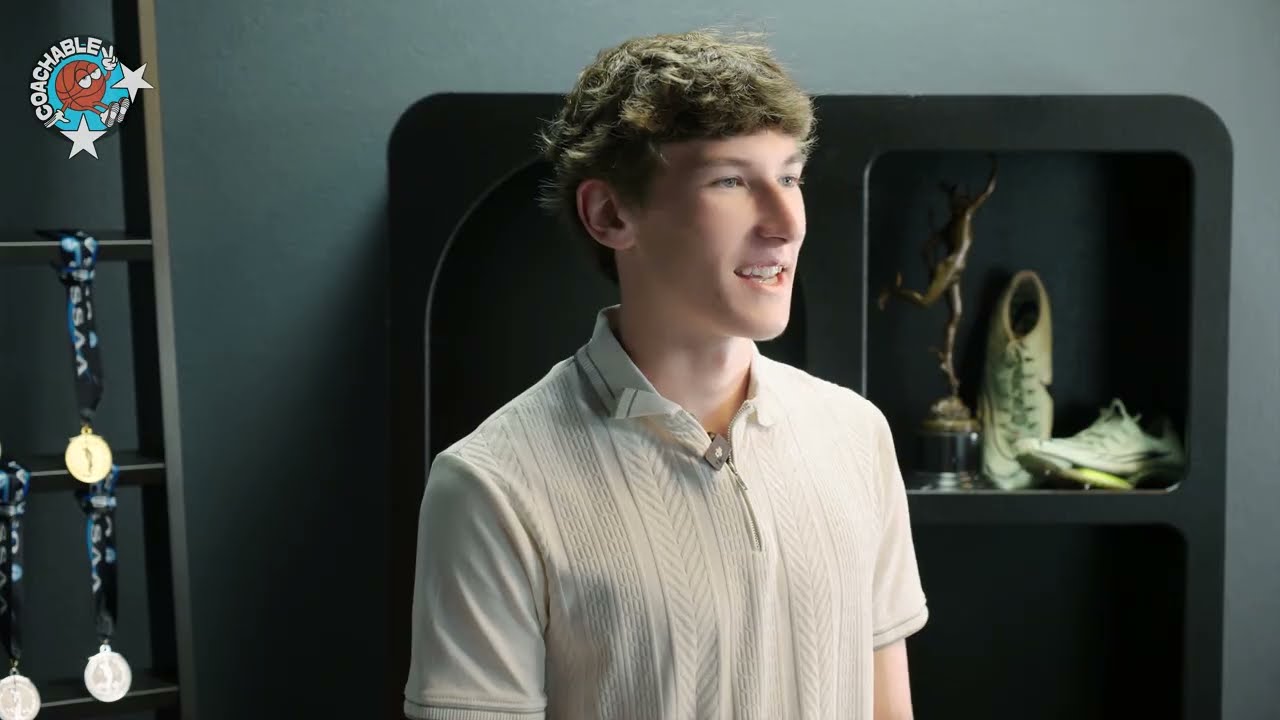
Broken Arrow's Speedster: Brody Pitt is Blazing a Path to Track Stardom
In the competitive arena of Oklahoma high school track and field, a name that is rapidly gaining recognition is Brody Pitt. A class of 2026 sprinter from Broken Arrow High School, Pitt is not just running; he's turning heads with his impressive times and setting the track ablaze.
Pitt has proven his prowess in the short-distance sprints, specializing in the 100m, 200m, and 400m dashes. His versatility and speed make him a valuable asset to the powerhouse Broken Arrow track program. Throughout his high school career, Pitt has shown consistent improvement, a testament to his dedication and work ethic.
During the 2025 indoor season, Pitt clocked a personal record of 47.95 in the 400 meters. He carried that momentum into the outdoor season, where he continued to excel. He posted a personal best of 21.95 in the 200 meters at the Choctaw HS Yellowjacket Invitational. In the 400 meters, he achieved a season record of 48.27.
How track and field recruiting is different
Track is the one sport where the number comes first. A college coach can evaluate a sprinter from a results database without ever seeing them run, and they will. That leads a lot of athletes to assume film does not matter in track. That assumption costs them.
Times get you into the conversation. Film is what a coach uses to decide whether your time is a ceiling or a floor.
What a sprint coach is actually looking at:
- Block start and drive phase. The first ten meters tell a coach whether you have been coached well or have been winning on raw speed. Raw speed with a poor start is exciting to a college coach, because it means there is time to be found.
- Mechanics at top speed. Arm carriage, posture, whether you tighten up. A sprinter who stays relaxed at 60 meters has room to grow.
- Deceleration in the 200 and 400. The back half is where races are won and where coaching shows. Film of your closing 100 is worth more than film of your start.
- Curve running. For 200 and 400 runners, how you handle the bend is a genuine technical differentiator that a results sheet cannot show.
How to present times and film together
Put your personal bests on the opening title card with the meet name and date for each one, and say whether it was hand timed or fully automatic. FAT and hand times are not interchangeable and a coach who catches an unlabeled hand time will discount everything else you claim. Being upfront about it reads as trustworthy, which is worth more than a tenth.
Note the conditions where they matter. Wind aided marks should be labeled. Indoor and outdoor should be separated. Coaches read a lot of these and they can tell when someone is presenting their numbers in the most flattering possible light rather than the most accurate one.
Show full races, not just finishes. A sprint reel should include at least two complete races from a fixed angle where the coach can see the whole field. A clip of you crossing the line first tells them nothing about how you got there or who you beat.
Include a relay leg if you have one. Handoffs show composure and coachability, and relay depth is a real recruiting need for a lot of programs.
Keep the edit restrained. Track film does not need heavy effects. Clean titles, an unobstructed angle and accurate labeling do the job.
Getting recruited out of the Tulsa area
Oklahoma produces far more college-capable athletes than it gets credit for, and the Tulsa metro is the densest part of that. Broken Arrow, Jenks, Bixby, Owasso, Union, Sand Springs, Sapulpa, Claremore, Coweta, Glenpool, Collinsville, Skiatook and Catoosa all field competitive programs. The problem is not talent. The problem is traffic.
College coaches have finite travel budgets and they spend them where the density is highest. A track and field staff based in Texas, Kansas, Arkansas or Missouri will drive to a Tulsa area event when it is convenient and skip it when it is not. If a coach never makes the trip during the one season you were healthy and playing your best, that is not a talent problem, it is an exposure problem.
This is exactly the gap film closes. A reel travels when you cannot. It reaches a coach in another state on a Tuesday night when they are clearing their inbox, and it costs them ninety seconds instead of a plane ticket. For an athlete in Broken Arrow or Owasso, film is not a nice extra. It is the primary way most out of state programs will ever evaluate you.
It also matters that the film is easy to say yes to. Coaches share reels internally. A clean, correctly labeled, quick loading video gets forwarded to a position coach. A shaky phone clip with no context does not.
When to start, realistically
The honest answer is earlier than most families think, and it is rarely too late to start.
Freshman and sophomore year. This is groundwork. Get comfortable on camera, keep every game file, and start a simple recruiting profile. You do not need a polished reel yet. You need footage that exists, because you cannot go back and film last season.
Junior year. This is the year film does the most work. Most programs are building their board now. A junior year reel that reaches coaches early in the cycle gets seen while there are still spots and money available, rather than in spring when the class is close to full.
Senior year. Still worth doing, and worth doing fast. Rosters shift late. Athletes decommit, transfer or get hurt, and staffs go looking for someone who can fill a specific hole immediately. The athletes who get those calls are the ones whose film is already sitting in an inbox.
NCAA contact rules differ by division and by sport, and they change. Check the current rules for your sport and division rather than relying on what an older sibling or a teammate's parent remembers.
Get your track and field reel made
Coachable is based at 8816 S Sheridan Rd in Tulsa. We edit recruiting film for high school athletes across the Tulsa metro and the surrounding communities, and we ship coach ready video without the guesswork.
Send us your raw footage and we handle the rest: the cuts, the graphics, the player identification, the pacing and the export in the formats recruiting platforms actually accept. See packages and pricing, watch reels we have cut for other athletes, or read the five things college coaches look for before you send anything.
Frequently asked questions
Do track and field athletes really need a highlight reel?
Times open the door and film decides how a coach reads them. Video shows start mechanics, top speed posture and how you close a race, which tells a coach whether your current time is close to your ceiling or well below it.
What should be on the title card of a sprint reel?
Name, graduation year, high school, events, and personal bests with the meet, the date, and whether each mark was fully automatic or hand timed. Label wind aided marks. Accuracy builds more trust than a flattering number.
How should I film a sprint race for recruiting?
Use a fixed angle wide enough to show the whole field for the entire race, rather than panning. Coaches need to see the competition and your mechanics through the full distance, especially the closing 100 in the 200 and 400.
When should Oklahoma track athletes send film to college programs?
After your junior outdoor season is the strongest single moment, since you will have your best verified marks. Send earlier if you have a standout indoor season, and send immediately as a senior.
Does Coachable edit track film for athletes outside Broken Arrow?
Yes. We are based in Tulsa on S Sheridan Rd and work with track athletes throughout the metro including Jenks, Bixby, Owasso, Union, Sand Springs, Sapulpa and Claremore.