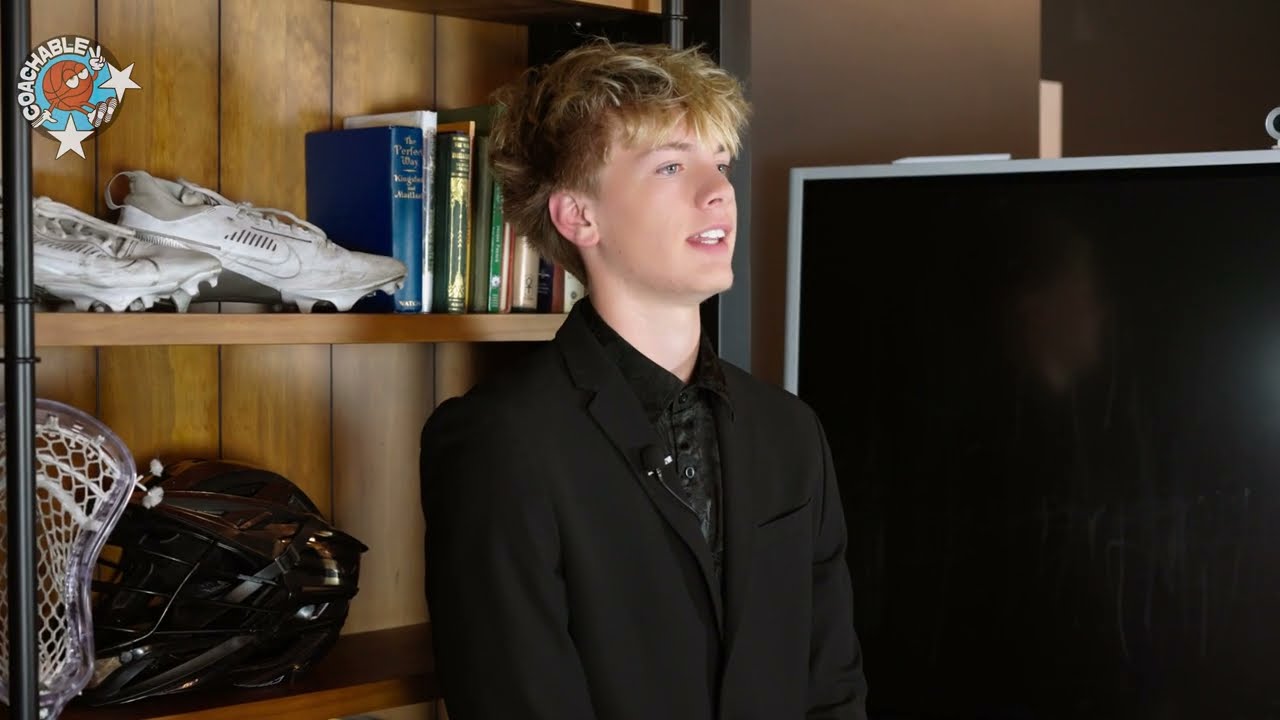
How a High School Lacrosse Player is Catching the Eye of College Coaches
In the hyper-competitive world of college recruiting, a strong performance on the field is just the beginning. For aspiring athletes like Maddon Feamster, a 2026 lacrosse prospect from Broken Arrow, Oklahoma, the real game is often played online. Through a savvy combination of highlight videos and a demonstrable eagerness to learn, Feamster is positioning himself to be noticed by a multitude of college programs, showcasing a blueprint for other young athletes to follow.
Feamster, a promising attackman and midfielder, has meticulously built his digital resume on platforms like NCSA and SportsRecruits. These platforms serve as a modern-day handshake, offering coaches a comprehensive look at a player's potential before they ever see them in person. His profiles highlight not just his on-field statistics but also his academic achievements and a personal statement that speaks to his dedication and work ethic.
What college lacrosse coaches look for in film
Lacrosse film is judged differently from most sports because so much of the sport is decision making in traffic. A coach watching an attackman is not primarily counting goals. They are watching what happens in the two seconds before the shot.
The things that get replayed:
- Off ball movement. Coaches want to see you working without the ball, because that is most of your time on the field. Cuts that pull a defender, backside movement, and timing on a slide are worth more than a highlight goal against a beaten defense.
- Dodging under pressure. Not just beating your man, but what you do when the slide comes. Do you feed the open man or force a low percentage shot?
- Hands. Catching in traffic, catching off hand, and finishing from angles that are not comfortable. Clean stick work reads as a player who can be plugged in without a year of remediation.
- Two way effort. Riding, backing up shots, ground balls. Midfielders especially get evaluated on whether they will do the unglamorous half of the job.
Ground balls deserve their own mention. There is no faster way to signal work rate on film than a run of contested ground ball wins. It is the lacrosse equivalent of a charge taken in basketball, and coaches notice it immediately.
How to build a lacrosse reel that gets watched
Lead with three or four plays that show your best version of the thing your position is judged on. For an attackman that is usually a dodge and finish plus a feed that creates a goal. For a midfielder it is a transition sequence, because it shows conditioning, stick work and decision making in one clip.
Keep it short. Two to three minutes is plenty for an initial reel. Coaches are triaging, not studying, and a reel that respects their time gets finished.
Label the film properly. Your name, graduation year, position, jersey number, height and the club or high school program. Spot shadow or arrow every clip so nobody has to hunt for you in a scrum. It sounds obvious. It is the single most common reason a reel gets closed early.
Include one longer, unedited segment at the end or as a separate link. Coaches who like your highlights will want to see a full possession or a full quarter to check whether the good plays were representative.
Getting recruited out of the Tulsa area
Oklahoma produces far more college-capable athletes than it gets credit for, and the Tulsa metro is the densest part of that. Broken Arrow, Jenks, Bixby, Owasso, Union, Sand Springs, Sapulpa, Claremore, Coweta, Glenpool, Collinsville, Skiatook and Catoosa all field competitive programs. The problem is not talent. The problem is traffic.
College coaches have finite travel budgets and they spend them where the density is highest. A lacrosse staff based in Texas, Kansas, Arkansas or Missouri will drive to a Tulsa area event when it is convenient and skip it when it is not. If a coach never makes the trip during the one season you were healthy and playing your best, that is not a talent problem, it is an exposure problem.
This is exactly the gap film closes. A reel travels when you cannot. It reaches a coach in another state on a Tuesday night when they are clearing their inbox, and it costs them ninety seconds instead of a plane ticket. For an athlete in Broken Arrow or Owasso, film is not a nice extra. It is the primary way most out of state programs will ever evaluate you.
It also matters that the film is easy to say yes to. Coaches share reels internally. A clean, correctly labeled, quick loading video gets forwarded to a position coach. A shaky phone clip with no context does not.
When to start, realistically
The honest answer is earlier than most families think, and it is rarely too late to start.
Freshman and sophomore year. This is groundwork. Get comfortable on camera, keep every game file, and start a simple recruiting profile. You do not need a polished reel yet. You need footage that exists, because you cannot go back and film last season.
Junior year. This is the year film does the most work. Most programs are building their board now. A junior year reel that reaches coaches early in the cycle gets seen while there are still spots and money available, rather than in spring when the class is close to full.
Senior year. Still worth doing, and worth doing fast. Rosters shift late. Athletes decommit, transfer or get hurt, and staffs go looking for someone who can fill a specific hole immediately. The athletes who get those calls are the ones whose film is already sitting in an inbox.
NCAA contact rules differ by division and by sport, and they change. Check the current rules for your sport and division rather than relying on what an older sibling or a teammate's parent remembers.
Get your lacrosse reel made
Coachable is based at 8816 S Sheridan Rd in Tulsa. We edit recruiting film for high school athletes across the Tulsa metro and the surrounding communities, and we ship coach ready video without the guesswork.
Send us your raw footage and we handle the rest: the cuts, the graphics, the player identification, the pacing and the export in the formats recruiting platforms actually accept. See packages and pricing, watch reels we have cut for other athletes, or read the five things college coaches look for before you send anything.
Frequently asked questions
How long should a lacrosse recruiting highlight reel be?
Two to three minutes for a first reel. Lead with your strongest three or four plays, because most coaches decide whether to keep watching in the first thirty seconds. Offer full game film separately for the coaches who want a deeper look.
When should an Oklahoma lacrosse player send film to college coaches?
Junior year is when film does the most work, because that is when most programs are building their recruiting board. Sophomores should be collecting footage even if they are not sending it yet, and seniors should send immediately, since late roster movement creates real openings.
Do I need a highlight reel if I already have an NCSA or SportsRecruits profile?
Yes. Those platforms are the distribution channel; the film is the product. A profile without strong video gives a coach nothing to evaluate, and the video is the part that gets forwarded to a position coach.
Does Coachable edit lacrosse film for players outside Broken Arrow?
Yes. We are based in Tulsa on S Sheridan Rd and work with athletes across the metro including Jenks, Bixby, Owasso, Union, Sand Springs and Claremore, as well as athletes who send footage from elsewhere in Oklahoma.
What footage do I need to provide?
Whatever you have. Game film from a sideline camera, phone footage from a parent, club tournament video, or platform exports. We work with what exists and tell you honestly if a specific game is not usable.