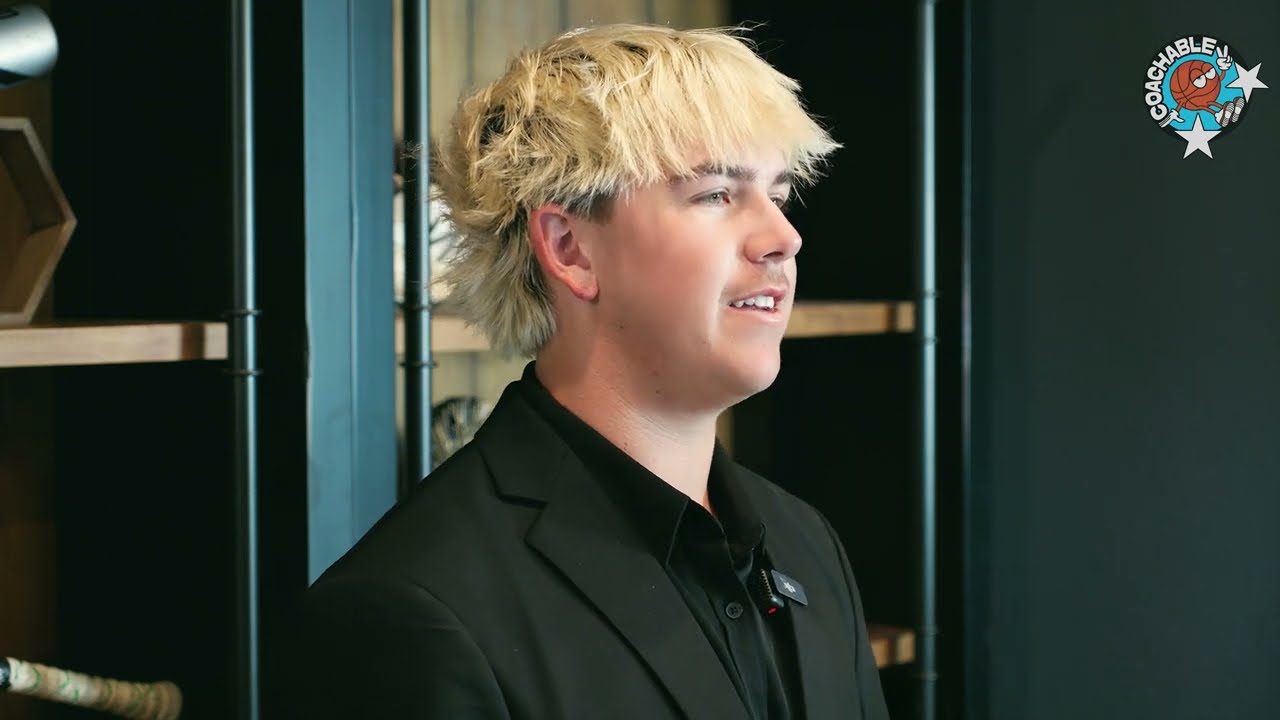
A Rising Star on the Broken Arrow Diamond
As a versatile athlete who contributes as both a right-handed pitcher and a first baseman, Tedesco brings a valuable skill set to his team. Standing at 6 feet tall and weighing around 185 pounds, he possesses a strong frame that powers his performance at the plate and on the mound.
Tedesco's commitment to the sport is evident in his active participation on major recruiting platforms. His profiles on sites like Prep Baseball Report, Five Tool, and MaxPreps showcase a player dedicated to honing his craft and preparing for the next level. This digital resume provides college scouts and baseball enthusiasts with a comprehensive look at his abilities and potential.
The stats speak for themselves. Tedesco has demonstrated notable power and arm strength. At showcases, he has recorded an impressive maximum exit velocity of 84.1 mph, indicating his ability to hit the ball with authority. From the infield, he has registered a velocity of 79.0 mph, a testament to his arm strength. These metrics, combined with a 7.63-second 60-yard dash, paint the picture of a well-rounded and athletic player.
What college baseball coaches look for in film
Baseball recruiting film is the most standardized of any sport, because coaches and cross checkers are looking for specific, comparable views. A reel that follows the expected format gets evaluated. A reel that does not gets skipped, not because the player is worse but because the coach cannot see what they need.
For a right handed pitcher, coaches want:
- An open side view of the delivery from the throwing arm side, showing the full body from the ground up. Arm action, hip and shoulder separation, direction to the plate, and where your front side goes.
- A view from behind the pitcher or behind the catcher so they can read movement on the ball rather than just velocity.
- Every pitch in the mix. Fastball, breaking ball, changeup, and enough repetitions of each that a coach can see whether the arm slot changes and tips the pitch.
- Live game sequences, not just bullpens. A bullpen shows mechanics. A live inning shows whether the mechanics survive a runner on second and a hitter fouling off.
For position players and two way athletes, the standard views are swings from the open side and from behind, fielding reps at your primary position with a clean throw to the base, and at least one run down the line from contact so a coach can time you.
Numbers, honesty and the recruiting platforms
Baseball has more measurable data than almost any other sport, and a lot of it is publicly recorded through showcase organizations and platforms like Prep Baseball Report, Five Tool and MaxPreps. That has one consequence worth understanding: a coach can and often will check whatever you claim.
Put your verified numbers on the title card and cite where they came from. Velocity, exit velocity, pop time, sixty time. If a number came from a specific showcase, say which one and when. Unattributed numbers get discounted, and an inflated number that gets checked ends the conversation permanently.
Height and weight belong on the card too. Coaches project bodies, and being honest about a frame that still has room on it is an advantage rather than a weakness.
How to build a baseball reel that gets watched
Keep the pitching reel to two or three minutes. Lead with your best fastball sequence from the open side, then show the breaking ball, then a live inning. Do not open with a strikeout celebration; open with mechanics.
Use a tripod. Handheld baseball film is genuinely hard to evaluate, because a coach is watching small movements in your delivery and the camera shake hides them.
Film from a consistent distance so repetitions are comparable to each other. A coach is looking for whether your third inning delivery matches your first.
Getting recruited out of the Tulsa area
Oklahoma produces far more college-capable athletes than it gets credit for, and the Tulsa metro is the densest part of that. Broken Arrow, Jenks, Bixby, Owasso, Union, Sand Springs, Sapulpa, Claremore, Coweta, Glenpool, Collinsville, Skiatook and Catoosa all field competitive programs. The problem is not talent. The problem is traffic.
College coaches have finite travel budgets and they spend them where the density is highest. A baseball staff based in Texas, Kansas, Arkansas or Missouri will drive to a Tulsa area event when it is convenient and skip it when it is not. If a coach never makes the trip during the one season you were healthy and playing your best, that is not a talent problem, it is an exposure problem.
This is exactly the gap film closes. A reel travels when you cannot. It reaches a coach in another state on a Tuesday night when they are clearing their inbox, and it costs them ninety seconds instead of a plane ticket. For an athlete in Broken Arrow or Owasso, film is not a nice extra. It is the primary way most out of state programs will ever evaluate you.
It also matters that the film is easy to say yes to. Coaches share reels internally. A clean, correctly labeled, quick loading video gets forwarded to a position coach. A shaky phone clip with no context does not.
When to start, realistically
The honest answer is earlier than most families think, and it is rarely too late to start.
Freshman and sophomore year. This is groundwork. Get comfortable on camera, keep every game file, and start a simple recruiting profile. You do not need a polished reel yet. You need footage that exists, because you cannot go back and film last season.
Junior year. This is the year film does the most work. Most programs are building their board now. A junior year reel that reaches coaches early in the cycle gets seen while there are still spots and money available, rather than in spring when the class is close to full.
Senior year. Still worth doing, and worth doing fast. Rosters shift late. Athletes decommit, transfer or get hurt, and staffs go looking for someone who can fill a specific hole immediately. The athletes who get those calls are the ones whose film is already sitting in an inbox.
NCAA contact rules differ by division and by sport, and they change. Check the current rules for your sport and division rather than relying on what an older sibling or a teammate's parent remembers.
Get your baseball reel made
Coachable is based at 8816 S Sheridan Rd in Tulsa. We edit recruiting film for high school athletes across the Tulsa metro and the surrounding communities, and we ship coach ready video without the guesswork.
Send us your raw footage and we handle the rest: the cuts, the graphics, the player identification, the pacing and the export in the formats recruiting platforms actually accept. See packages and pricing, watch reels we have cut for other athletes, or read the five things college coaches look for before you send anything.
Frequently asked questions
What camera angles do college baseball coaches want for a pitcher?
An open side view from the throwing arm side showing the full body, plus a view from behind the pitcher or catcher so movement is readable. Use a tripod at a consistent distance so repetitions can be compared.
Should a baseball recruiting video use bullpen or game footage?
Both. Bullpens show clean mechanics and let a coach see every pitch in the mix. Live game innings show whether those mechanics hold up with runners on and a count to manage.
How do I present velocity and other numbers honestly?
Put them on the title card with the source and date, such as the specific showcase where they were recorded. Coaches cross check against Prep Baseball Report, Five Tool and MaxPreps, and an inflated number that gets caught ends the conversation.
When should Tulsa area baseball players send film to college coaches?
Junior year is the main window, ideally after summer showcase season when you have fresh verified numbers. Seniors should send right away, because late roster movement in college baseball is common.
Does Coachable edit baseball film for players outside Broken Arrow?
Yes. We are in Tulsa on S Sheridan Rd and work with baseball players across the metro including Jenks, Bixby, Owasso, Union, Coweta, Glenpool and Claremore.